

Getting Married in Oslo and Eastern Norway: Venues, Suppliers, and Timing
13 October 2026
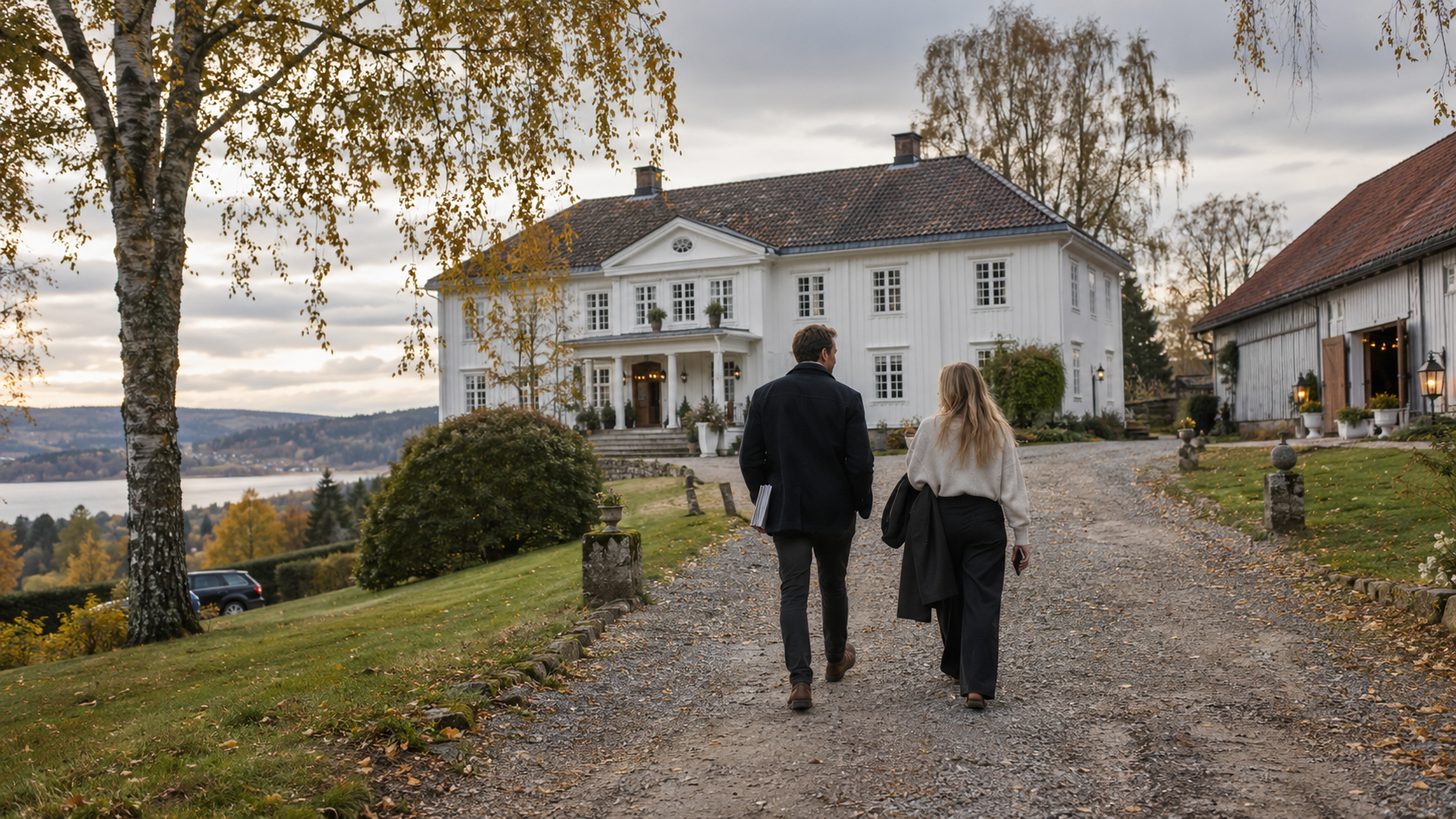
Eastern Norway is where most Norwegian couples get married, simply because it is where most people live. That means a good selection of both venues and suppliers, but it also means the most popular dates go quickly.
This guide is an overview of how to approach it, which areas are worth looking at, and what is worth thinking through along the way. We do not recommend specific venues, because what suits you depends entirely on how many guests you have, what you picture, and what you have to spend. But we can point you towards where to look, and which questions to ask.
First: The City or Outside It?
The first decision that genuinely matters is whether you want to marry in Oslo itself, or somewhere just outside.
In the city you usually get simpler logistics. Guests can get there by public transport, there is plenty of accommodation nearby, and people can get home without it becoming an operation. On the other hand, the selection of larger venues is more limited, and some places have restrictions on noise and finishing times because they sit in residential areas.
Outside the city opens up more possibilities, particularly for larger celebrations and for couples who want nature around them. In return, you need to think through transport for guests, accommodation nearby, and how people get home late at night.
Neither is better than the other. But it is a choice that affects a lot of what follows, so it is worth making early.
Areas Worth Looking At
Here are some directions to start searching in, depending on the kind of setting you picture.
Central Oslo. Hotels, restaurants, function venues, and cultural buildings. Practical for travelling guests, and well suited if you want everything within walking distance.
Bærum, Asker, and west of the city. Proximity to Oslo combined with more space and greenery, with the fjord never far away.
Follo and south towards Østfold. Farms, manor houses, and older properties, with a shorter drive from Oslo than many people expect.
Romerike and north. Larger venues, farm weddings, and more space for your money. Also practical if many guests are flying in.
Ringerike, Hadeland, and towards Hurdal. Nature, lakes, and forest, for couples who want a little further from the city without a long journey.
Vestfold and the coast. Sea and archipelago, with a number of places well established for summer weddings.
This is not an exhaustive list, and there are lovely places in every direction. The point is to decide which direction to search in before you begin, so you do not drown in options.
Ceremonies in Oslo and the Surrounding Area
For a civil ceremony, the municipality conducts it. Oslo offers civil ceremonies, as do the surrounding municipalities. Practice varies between municipalities when it comes to where ceremonies can be held, which days and times are available, how long is set aside, and whether there is a fee for couples who do not live in the municipality.
So the only sensible advice here is this: check with the relevant municipality directly, and in good time. The information is usually on their own website, and it is worth getting in touch early if you want a particular date.
For a church wedding, contact the relevant parish office. For a humanist ceremony, these are arranged by the Norwegian Humanist Association, which has its own registration deadlines. And ceremonies within other faith and belief communities with marriage rights follow each community's own procedures.
Whichever form you choose, the certificate from the Norwegian Tax Administration must be in place and reach your officiant before the ceremony. It is valid for four months, so most couples apply four to five months ahead.
When Should You Book?
The pattern here is fairly clear, though it varies from place to place.
Saturdays between May and September are the most in demand, and many of the most popular venues book these dates well in advance. If you have a particular place in mind, it is worth getting in touch as early as you can to hear what they have available.
If you are flexible, a lot opens up. Fridays and Sundays are often easier to get, as are dates in May, September, and the winter months. Many couples find they get both the venue and the photographer they originally wanted simply by being open on the date.
The same applies to suppliers. Photographers, caterers, and musicians who work regularly with weddings tend to have full Saturdays in season, but better availability otherwise.
Practical Things Specific to This Area
A few things come up repeatedly when planning a wedding in and around Oslo.
Transport between ceremony and reception. If the ceremony is one place and the celebration another, think through how guests get between them. A coach is common when the distance is meaningful, particularly if the reception is outside the city.
Accommodation for travelling guests. In the city there is plenty to choose from. Outside it, options can be more limited, so it is worth looking into early and asking whether the venue has arrangements nearby.
Parking. In the centre, this is something to tell guests about in advance. Outside the city it is usually simpler, but worth mentioning either way.
Noise and finishing times. Some venues, particularly in built up areas, have restrictions on music and when the celebration must end. Ask about this specifically before booking, so it does not surprise you late in the planning.
Weather and season. If anything is happening outdoors, there should be a genuine indoor alternative. That applies all year round here.
Questions to Take With You on a Venue Visit
Wherever in eastern Norway you are looking, these are worth asking:
What is the capacity for a seated dinner, and what is it for standing and dancing?
Is catering included, or can we bring our own? Is there a kitchen on site?
What is included in the price in terms of tables, chairs, tableware, and staff?
When can we set up, and when do we need to be out?
Are there noise restrictions or a curfew on music?
How accessible is it for guests who need a lift, a ramp, or an accessible toilet?
What is the alternative if it rains?
What are the cancellation terms, and what happens if we need to move the date?
Always ask for a complete quote based on your actual guest numbers and date, so you are comparing totals rather than headline prices.
Finding Suppliers Nearby
Once the venue is settled, the photographer and caterer are the most urgent. After that come music, flowers, cake, and transport.
One practical tip: look for suppliers who know the area. A photographer who has worked at your venue before knows where the light is good and where the photographs tend to be taken, and a caterer who has delivered there before knows what the kitchen can handle.
Fjora has a directory of more than 1,400 hand picked Norwegian suppliers that can be filtered by area, so you can see who works in Oslo, Akershus, and the wider region without searching all over the internet.
How Fjora Fits In
The rest of the planning is the same wherever in the country you marry, and that is where Fjora comes in.
Guest list, RSVP, budget, checklist, seating chart, and your own wedding website all connect, so replies to your invitation land straight in your guest list, and dietary needs follow the guest through to your catering overview. The checklist reminds you of deadlines along the way, including the marriage certificate and booking your officiant, both of which are easy to forget.
The wedding website is particularly useful here, since it is where you gather everything practical your guests wonder about: how to get to the venue, where to park, what accommodation is nearby, and the schedule for the day. That saves you a great many repeat questions, especially if a number of guests are travelling.
Fjora is free for everyone who registers in 2026, and both of you log in and see the same thing.
Finally
Eastern Norway has plenty of choice, but the best dates go early. Decide on your direction first, meaning city or countryside, get in touch with places in good time, and always check the formalities directly with the municipality or community concerned, since practice varies.
After that it is simply planning, and there is plenty of help for that part.
Getting married in eastern Norway? In Fjora you can find suppliers in the area and gather the whole planning process in one place. It is free to get started.
Frequently Asked Questions
Where can you get married in Oslo?
Oslo has a wide selection of hotels, restaurants, function venues, and cultural buildings, and the municipality also conducts civil ceremonies. What suits you depends on guest numbers and the setting you want. Capacity, noise restrictions, and finishing times vary between venues, so it is worth asking specifically.
How do you book a civil ceremony in Oslo?
Civil ceremonies are arranged by the municipality, and information about locations, times, deadlines, and any fees is on their own website. Practice varies between municipalities, so contact them directly and ideally well in advance if you want a particular date.
When should you book a wedding venue in eastern Norway?
Saturdays between May and September are the most in demand, and popular venues can be booked a long time ahead. If you have a particular place in mind, get in touch early. If you are flexible on the date, it is usually easier to find availability.
Is it more expensive to get married in Oslo than outside it?
It varies considerably with the type of venue, guest numbers, and what is included, so it is difficult to generalise. Ask for complete quotes based on your actual numbers and date, and compare totals rather than starting prices.
What should you consider if the reception is outside Oslo?
Think through transport for guests, accommodation nearby, and how people get home late at night. Many couples arrange a coach when the distance is meaningful. Gather the practical information in one place, such as a wedding website, to save yourself repeat questions.
Do we need the marriage certificate even if we marry in Oslo?
Yes. The certificate from the Norwegian Tax Administration is required wherever in the country you marry, and whichever ceremony form you choose. It is valid for four months and must reach your officiant before the ceremony.