

How to Choose Your Wedding Venue: Capacity, Cost, and the Questions That Decide It
29 July 2026
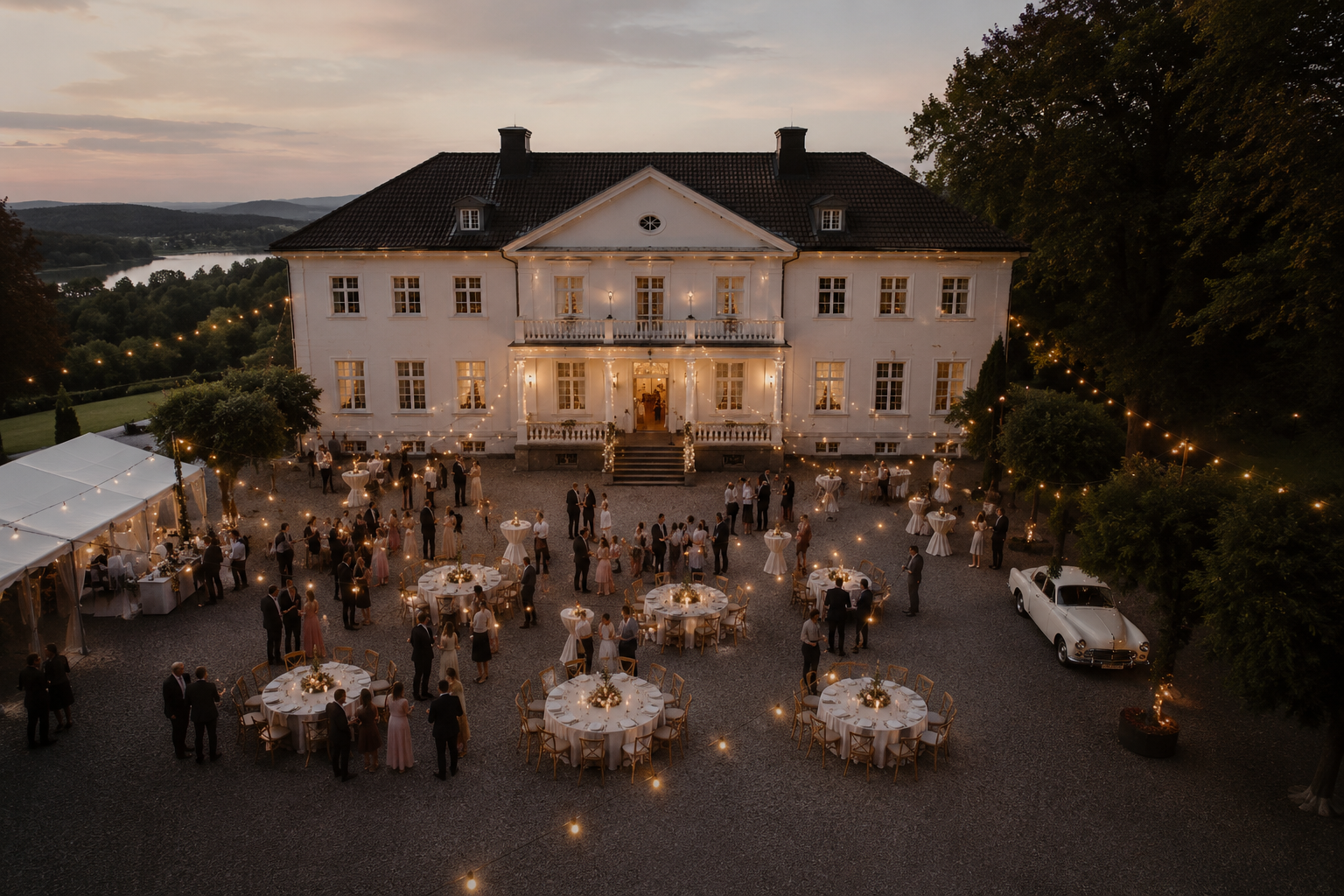
Of all the decisions you will make while planning your wedding, the venue determines the most.
It determines how many guests you can have. It often determines the date, because available capacity drives more than people expect. It sets the frame for the atmosphere, it affects the budget more than any other single choice, and it decides a whole range of practical things you have not thought about yet.
Which is why it is also the decision worth spending the most time on. Here is how to get it right.
Start With Three Numbers, Not With Photographs
It is tempting to start browsing beautiful venues immediately. But before you do, there are three numbers that will save you a great deal of wasted time.
Your approximate guest count. A venue that seats eighty is not an option if you are going to be a hundred and thirty, however lovely it is.
Your budget range for venue and food combined. At most venues these are linked, since many provide their own catering or require you to use theirs.
Your geographic area. Are you marrying near where you live, near where one of you grew up, or somewhere else entirely?
With those three settled, you can rule out eighty percent of the options before you start looking, and spend your energy on the ones that are actually possible.
The Types of Venue, and What They Suit
There is a wide range out there, and the different types have very different strengths.
Hotels. Practical and predictable. In house catering, accommodation for guests in the same building, experience with weddings, and usually a dedicated contact person. Excellent if many guests are traveling. A little less character than other options, but the good ones make up for it in quality and reassurance.
Estates, manor houses, and historic properties. Character and atmosphere in abundance, often with beautiful grounds. Capacity varies widely, and the most popular are booked very early. Check what is included, since some rent out the space empty and leave the rest to you.
Restaurants. Often the best choice for smaller weddings with a strong focus on food. Simple, personal, and very little logistics. Limited capacity, and rarely the option to dance late into the night.
Barns, farms, and rustic venues. Popular, beautiful, and flexible, but they ask more of you. The space often comes without catering, without furniture, and sometimes without a kitchen, so expect to bring more in yourself. Always check power, toilets, and what happens if it rains.
Community halls and function venues. More affordable, roomy, and flexible, and often what makes a larger wedding possible at all. They require you to bring the character to the room, but in return they give you complete freedom.
Marquees and outdoor spaces. Beautiful and entirely open, and often the answer for the largest celebrations. But it is genuinely a small construction project: marquee, flooring, power, heating, toilets, and a solid weather contingency.
What Does a Wedding Venue Cost?
Prices vary enormously, and it mostly comes down to what is included.
Some venues quote a price per guest that covers the space, the food, and the service. Others charge a hire fee for the space with catering on top. Some have a minimum spend, meaning a requirement that you spend a certain total amount. That is very common at hotels and restaurants in high season.
The important thing is to compare the total, not the headline. A venue that looks affordable can become the most expensive once a marquee, furniture, catering, staff, and transport are added. And a venue that looks expensive can be the best value if everything is included.
Always ask for a complete quote based on your actual guest count, your date, and what you actually plan to have.
The Questions to Ask Before You Book
This is the list worth taking with you on a site visit. In practice, it is the answers to the boring questions that determine how well the day flows.
What is the maximum capacity for a seated dinner, and what is it for standing and dancing? Those numbers are rarely the same.
Is catering included, or can we bring our own? Is there a kitchen on site? Can we bring our own drinks, and is there a corkage fee?
What is included in the price? Tables, chairs, tableware, linen, staff, clearing up? What costs extra?
When can we come in to set up, and when do we need to be out? Can we clear up the following day?
Are there noise restrictions or a curfew on music? This catches a lot of couples out late in the planning.
How accessible is the venue for guests with mobility needs? Is there a lift, ramps, accessible toilets?
What is the contingency if it rains and something is planned outdoors?
How many weddings have you hosted, and will we have one consistent contact person throughout?
What are the cancellation terms, and what happens if we need to move the date?
Is there accommodation nearby, and do you have arrangements with anyone?
Book Early, and Stay Flexible on the Date
The most sought after venues are often booked 12 to 24 months in advance for Saturdays in the high season from May to September. If you are marrying in summer 2027, now is when many couples are securing their date.
But flexibility is the easiest way to get more for your money. A Friday or Sunday often opens doors that are closed on Saturdays. May and September have much the same long evenings as July with lower demand. And winter weddings, with candlelight, fires, and an atmosphere entirely their own, are seriously underrated.
Visit in Person, and Look for What Others Forget
Photographs do not lie, but they rarely tell the whole story. Go and see it, ideally at roughly the same time of day as your wedding, so you see the light.
Notice the flow: where will guests stand with a welcome drink, where is the bar, where is the dance floor, how far is it to the toilets? Notice the acoustics, which determine whether people can talk to each other over dinner. And notice where the tables naturally sit, because that shapes your seating chart later.
Ask where the best photographs are taken, too. Most venues know exactly where photographers like to work.
Fjora and the Venue Search
In Fjora you will find a hand picked directory of wedding vendors, including venues, so you can search in one place instead of ploughing through the entire internet.
Once you have chosen, you add the venue to the budget module with the deposit and final payment, so the biggest cost in your wedding is part of the total overview from day one. The deadlines land in your checklist, the capacity guides your guest list, and when the time comes, you build your seating chart around the room you chose.
Both of you have the same access and the same overview, so neither of you is left alone with the details from the site visit.
The One Thing Worth Remembering
The best venue is not necessarily the most beautiful one. It is the one that holds your guests, fits your budget, and gives you a day that flows without you having to solve problems along the way.
See several, ask the boring questions, and always ask for the total. And when you find the one that feels right, book it. Good venues do not wait.
Looking for a wedding venue? In Fjora you will find a curated directory of vendors, with everything from budget to deadlines in one place. Get started for free.
Frequently Asked Questions
When should we book our wedding venue?
As early as possible, ideally 12 to 24 months in advance if you want a Saturday in the high season between May and September. The venue is the vendor that fills up first, and it often determines your date.
How much does a wedding venue cost?
It varies widely depending on the type of venue and what is included. Some charge a price per guest covering food and service, others a hire fee with catering on top. Many also have a minimum spend in high season. Always ask for a complete quote based on your guest count and date.
What questions should we ask a wedding venue?
Ask about maximum capacity for a seated dinner and for dancing, whether catering is included or can be brought in, what is provided in terms of tables, chairs, and staff, when you can set up and must be out, whether there are noise restrictions or a curfew, accessibility for guests, the wet weather contingency, and the cancellation terms.
How do we know if a venue is big enough?
Ask specifically about capacity for a seated dinner, which is often lower than the standing capacity. Have an approximate guest count ready before you start looking, since it rules out the venues that were never going to work.
Should we choose the date or the venue first?
Many couples find the venue first and let it set the date. If you are flexible on the date, you get far more options and often better prices, especially outside Saturdays in July and August.
Is it cheaper to marry outside high season?
Often yes. Fridays and Sundays, along with months like May, September, and the winter months, have lower demand and generally offer better availability and more favourable pricing than Saturdays in July and August.