

Wedding Catering and Menu: How to Choose Food Your Guests Will Still Talk About
22 October 2026
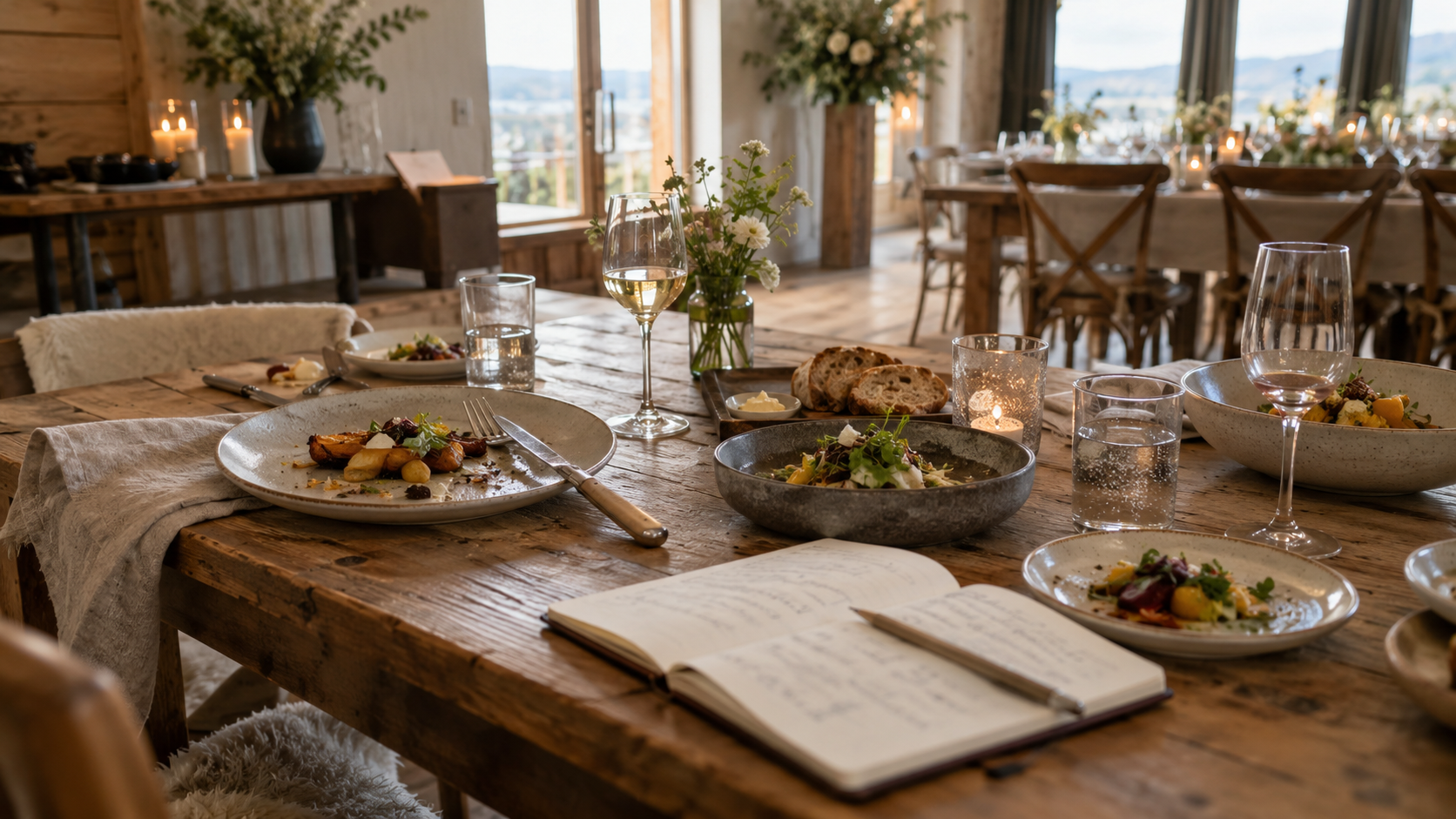
Ask someone about a wedding they went to five years ago and there are two things they remember. The atmosphere, and the food.
That is a little unfair given everything else that goes into a wedding day. But it is worth knowing, because it means the food is one of the few areas where the effort genuinely stays with your guests long afterwards.
If you are getting married next summer, this tends to be the autumn you start talking to caterers and arranging a tasting. Here is what that decision actually involves.
First: What Kind of Meal Do You Picture?
Before you talk price with anyone, it helps to know what kind of meal you want, because it affects cost, staffing, and atmosphere.
A served menu with a starter, main, and dessert creates a calm, more formal frame. Guests stay seated, speeches get natural pauses between courses, and the evening has a clear rhythm. In return it needs more staff, and it takes longer, often three hours or more with speeches in between.
A buffet is usually more relaxed and lets guests choose for themselves, which can make it easier to handle a range of dietary needs. It tends to need less service staff, but more space in the room and a well thought through flow so everyone is not queuing at once.
Sharing plates brought to the table sit somewhere between the two. Many couples find they create a lovely atmosphere around the table, though they need more table space than you might expect.
Simpler formats such as tapas, a barbecue, a food truck, or a generous evening spread suit smaller or more informal weddings and can be gentler on the budget.
There is no single right choice. Ask yourselves what kind of evening you want, and let the meal follow from that.
What Drives the Price
Prices vary considerably between caterers and regions, so it is difficult to say anything general about the level. But what pushes the cost up or down is fairly predictable.
The number of courses and how labour intensive they are. Staffing, meaning how many servers are needed and for how long. Whether drinks are included or charged separately. Hire of tableware, glassware, and linen if the venue does not provide them. And travel and setup, particularly if the venue is somewhere rural.
One thing many couples discover along the way: the per head price is rarely the whole story. So always ask for a complete quote based on your actual guest numbers, your date, and what you genuinely plan to have, including service, drinks, and anything charged on top. Two quotes that look similar per head can differ quite a bit once everything is included.
Season Is One of the Easiest Things to Use
Ingredients in season tend to be both better and more affordable, and it is one of the few places you can save without anyone noticing in a bad way.
A menu built around what is genuinely good in the month you marry usually lands better than one built around an idea of what a wedding ought to serve. A good caterer will normally be happy to talk about this, and many have clear views on what they do best on a particular date.
It is worth asking directly: what would you serve if you could choose freely in June?
The Tasting
Most caterers offer a tasting, and practice varies on whether it costs anything, how many people can come, and how early it can happen.
A few things that make a tasting more useful:
Come with a sense of direction, but stay open. The caterer knows their own kitchen best.
Taste what will actually be served, at the scale it will be served. Something wonderful for eight can be hard to deliver consistently to two hundred.
Ask how the food holds. How long does it take from kitchen to table, and how does that affect the dishes?
Say what your budget range is. It saves you both time.
Bring a few people, not many. Too many opinions makes it harder to decide.
Dietary Requirements and Allergies
This is the part that most often causes stress late in planning, and it is easy to avoid by handling it early.
Collect allergies and dietary needs as part of your RSVP rather than as a separate round afterwards. That way you are not messaging eighty people in May.
Keep the overview in one place, and make sure it follows the guest all the way to the kitchen. Knowing that someone is gluten free is not enough, the caterer also needs to know who and where they are sitting.
Ask the caterer how they handle it in practice. How are dishes marked, how does the server know who gets what, and how late can you submit changes? That last one is worth knowing, because changes always come.
If your guests come from a range of backgrounds, the needs may be broader than allergies alone, for example vegetarian, halal, or food without pork or alcohol. That is entirely ordinary, and most caterers are used to it, but it helps to say so early so they can plan for it.
Drinks, and the Cost That Often Surprises People
Drinks are one of the areas that most easily grow beyond what you had in mind.
Clarify early whether drinks are included in the quote or charged separately, and if so, how that is calculated. Ask too whether you can bring your own, and whether a corkage fee applies. Practice varies quite a bit between venues and caterers.
Think through the welcome drink, wine with the meal, something for the toast, the bar through the evening, and non alcoholic options. That last one is worth spending a little time on. A couple of good alcohol free choices mean a great deal to guests who do not drink, and cost very little.
The Cake and the Late Night Food
Wedding cakes are often ordered from a bakery, though some caterers offer them too. It is worth asking, since it can simplify the logistics.
And then there is late night food, easy to forget while planning but genuinely memorable. Something simple late in the evening keeps the dance floor going longer than you might think. It does not need to be elaborate.
Questions to Ask a Caterer
When you are speaking to potential caterers, these are worth getting answers to:
Have you worked at this venue before, and what are the kitchen facilities like there?
What is included in the price in terms of servers, tableware, glassware, linen, and clearing up?
How do you handle allergies and dietary requirements, and how late can we submit changes?
When do you need final guest numbers?
Are drinks included, and can we bring our own?
What does the service timeline look like, and how do you coordinate with the master of ceremonies around speeches?
What happens if numbers change significantly, and what are the cancellation terms?
When Should You Book?
This varies between caterers, but catering sits alongside the venue and photographer among the things that fill up first, particularly for Saturdays in the high season between May and September.
If your venue provides its own catering, it becomes part of the venue decision. If you are bringing in an external caterer, it is worth getting in touch once your date and venue are settled to hear what they have available. Many couples arrange a tasting well ahead of the wedding, often six months or more in advance.
Caterers usually need final guest numbers some way into the planning, often a couple of weeks before the wedding, but ask specifically since it varies.
Where Fjora Comes In
A lot of the practical side of the food is really about the guest list, and that is where Fjora makes it easier.
When guests respond to your invitation through your wedding website, you can collect allergies and dietary needs in the same form. That information follows the guest through the system, so you have an up to date overview to hand your caterer rather than searching through messages and emails. And when the seating chart is set, you also know who is sitting where, which the kitchen and servers will appreciate.
The budget module accounts for food rarely being a single cost. Per head price, drinks, service, cake, and late night food can each be entered separately, so the total is accurate from the start.
The supplier directory holds more than 1,400 hand picked Norwegian vendors, filterable by area, so you can see who works where you are getting married.
Fjora is free for everyone who registers in 2026, and both of you see the same thing.
Finally
Choose a meal that suits the evening you want, not the other way around. Use the season. Ask for a complete quote rather than a per head figure. Collect dietary needs early and keep them in one place. And remember the late night food.
The rest you can largely leave to people who do this every weekend.
Planning your wedding? In Fjora you can find suppliers nearby and gather your guest list, dietary needs, budget, and seating chart in one place. It is free to get started.
Frequently Asked Questions
How much does wedding catering cost?
It varies considerably between caterers, regions, and types of meal, so it is hard to give a general figure. The main cost drivers are the number of courses, staffing, whether drinks are included, hire of tableware, and travel. Always ask for a complete quote based on your guest numbers and date.
Buffet or plated menu for a wedding?
Both work well, and the choice is about the kind of evening you want. A plated menu creates a calmer, more formal frame with natural pauses for speeches, while a buffet is often more relaxed and can make it easier to cover a range of dietary needs. A buffet does need good space and a well planned flow.
When should you book wedding catering?
Catering is among the suppliers that fill up first, particularly for Saturdays between May and September. Many couples get in touch as soon as their date and venue are settled. If the venue provides catering, it is settled as part of the venue decision.
How do you handle allergies at a wedding?
Collect allergies and dietary needs as part of your RSVP rather than in a separate round afterwards, and keep the overview in one place that follows the guest through to the kitchen. Ask your caterer how dishes are marked, how servers know who gets what, and how late you can submit changes.
When does a caterer need final guest numbers?
It varies, but many ask for final numbers a couple of weeks before the wedding. Ask specifically and early, since it affects when you should set your RSVP deadline.
Should you serve late night food at a wedding?
Many couples do, and it need not be elaborate. Something simple late in the evening often keeps guests around longer, and it is one of the things people remember from a wedding.