

Wedding Dress Shopping: When to Start Looking, and What Is Worth Knowing First
6 October 2026
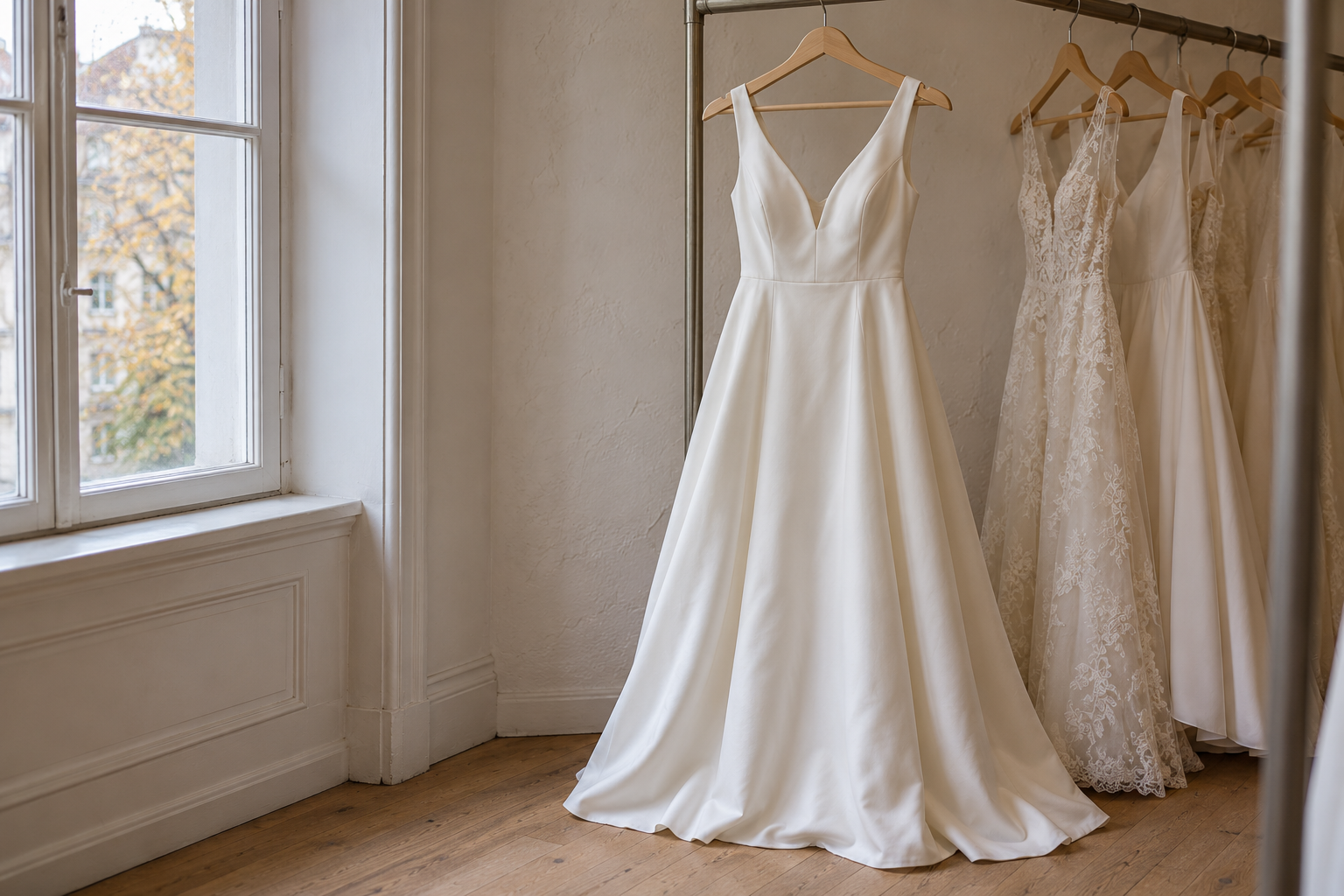
It is October, and if you are getting married next summer, this tends to be the month the dress starts quietly appearing in the back of your mind.
It is a slightly strange thing to plan. On one hand, it is just a piece of clothing. On the other, it may be the only outfit in your life that people will look at in photographs fifty years from now. And somewhere between those two thoughts sits the question most people wonder about privately first: when do I actually need to start?
Here is a calm walk through it, without turning it into a project.
The Timeline, and Why It Is Longer Than You Would Expect
Many bridal shops suggest ordering your dress somewhere around eight to twelve months before the wedding. That sounds like a lot, but there is a reason for it.
A good number of wedding dresses are made to order, often abroad, and delivery can take anywhere from roughly three to seven months. Once the dress arrives, it usually needs altering, and alterations tend to take a few weeks with several fittings along the way.
Add those two together and you can see why the autumn before a summer wedding is a natural time to start.
That said, this varies a great deal. Some shops carry dresses in stock, some labels deliver faster, and a few offer rush options for an additional cost. So if you are starting late, it is far from hopeless. It is simply worth mentioning your date the moment you get in touch, so the shop knows what to show you.
And if you are having a dress made, or ordering something custom, you will probably want to allow even more time.
Set a Budget That Covers Everything Else Too
The most common surprise is not the dress itself, but what comes with it.
Alterations usually sit on top of the dress price, and how much depends on how much needs doing. Then there are shoes, undergarments that work with the style, possibly a veil or something for your hair, and sometimes cleaning or storage afterwards.
Prices span a very wide range, and there are lovely dresses at most price points. The point is simply to decide on a figure that covers the whole picture before you start trying things on, rather than one for the dress alone.
Something many people find helpful: say your budget out loud in the shop straight away. Good consultants are entirely used to it, and it saves you from falling for something well beyond what you had in mind.
What an Appointment Is Usually Like
If you have never been to a bridal shop before, it helps to know roughly what to expect.
Most shops ask you to book in advance and typically set aside an hour or so. You will usually try a selection of dresses with a consultant who helps you in and out of them, since wedding dresses are rarely something you handle alone.
One thing that surprises many people: the sample dresses in the shop often come in just a few sizes, and they are clipped or pinned to give an impression of how the style will look on you. Which means the dress you try on rarely fits properly on the day. That is completely normal, and it is not how it will look in the end.
A few practical things that tend to make the appointment better: bring shoes with roughly the heel height you imagine, wear neutral coloured underwear, and keep makeup light.
Who Should You Bring?
This is one point where many people make the same choice and slightly regret it.
It is tempting to bring everyone who wants to come. The trouble is that the more people in the room, the more opinions there are, and the harder it can be to hear your own.
Most people find two or three is plenty. Ideally people who know you well, who are honest without being blunt, and who are able to let you lead.
And if someone important to you cannot be there in person, sending a photo or doing a video call works perfectly well. You do not need a full room to do this properly.
On Buying a Dress Online
It works, and plenty of people do it. But it is worth going in with your eyes open.
The upside is usually price and choice. The downside is that you cannot try before it arrives, that sizing charts vary considerably between labels, and that returns can be difficult or expensive, particularly from abroad. Some people also find that fabrics and details look different in person than in photographs.
If you do go online, it is worth reading the return terms carefully before ordering, going by measurements rather than size since charts differ, and assuming the dress will still need altering by a seamstress once it arrives.
The same broadly applies to pre owned dresses, which more and more people are buying. Plenty of beautiful dresses have been worn for a single day, and there are both shops and marketplaces for this. Here too, allow for alterations and possibly cleaning.
Once You Have Found It
Two things are worth having a handle on at the point you order.
The first is the paperwork. Get in writing what you have ordered, what is included, what alterations cost, and when the dress is expected. That is not distrust, it is simply useful when nine months have passed.
The second is the dates. Note down when the dress is due, when the fittings are, and when the final alteration should be finished. Many people aim to be completely done a couple of weeks before the wedding, so it is not something left to think about at the end.
And then, perhaps most importantly: stop looking. Once you have decided, it helps to stop scrolling. There will always be more beautiful dresses out there, and finding them after the decision is made does nobody any good.
A Small Note on How It Is Supposed to Feel
There are endless stories about crying when you find the one, about simply knowing.
Some people experience exactly that. Many do not, and it means nothing at all. Plenty of people just feel a quiet sense that this one works, and that is an entirely valid way of knowing.
The only thing that really counts is that you feel like yourself, that you can sit and dance and eat in it, and that you are not thinking about it all day.
Where the Dress Fits Into Everything Else
The dress is one of the few parts of wedding planning with its own long timeline, with ordering, delivery, and several fittings spread across many months. Which is why it helps to have those dates somewhere you will actually see them.
In Fjora, the checklist is where you can add deadlines along the way, such as when the dress is due and when your fittings are, so they are not something you have to carry in your head. And the budget module accounts for the fact that a dress is rarely one cost but several, so alterations, shoes, and accessories are part of the total from the start rather than appearing as a surprise in May.
Both of you see the same thing, so it is easy to keep track without anyone having to be the bookkeeper.
Finally
Start looking in good time, ideally around a year ahead if you can, and mention your date when you get in touch. Set a figure that covers alterations and accessories, not just the dress. Bring a few people you trust. And once you have chosen, let it be chosen.
The rest is really just looking forward to it.
Planning the rest of it too? In Fjora you gather your checklist, budget, guest list, and wedding website in one place. It is free to get started.
Frequently Asked Questions
When should you start looking for a wedding dress?
Many bridal shops suggest ordering around eight to twelve months before the wedding, since a number of dresses are made to order and then need altering. This varies between shops and labels, so it is worth mentioning your date when you first get in touch.
How long does a wedding dress take to arrive?
Delivery times vary considerably, often falling somewhere between three and seven months for made to order dresses. Some shops carry stock or offer faster options, so it is worth asking directly if you are starting late.
How much does a wedding dress cost?
Prices span a very wide range, and there are dresses at most price points. It helps to set a figure that also covers alterations, shoes, undergarments, and any veil, since these usually sit on top of the dress price itself.
How many people should you bring to a bridal appointment?
Most people find two or three works best. More opinions in the room can make it harder to hear what you think yourself. Choose people who are honest but who will let you lead.
Is it safe to buy a wedding dress online?
Many people do so happily, but it takes a little more research. Read the return terms carefully, go by measurements rather than size since charts vary between labels, and assume the dress will still need altering once it arrives.
How many fittings do you need?
It depends on how much work is involved, but a couple of fittings over a few weeks is common. Many people aim to have alterations completely finished a couple of weeks before the wedding, so nothing is left hanging at the end.