

Your Wedding Day Timeline: How to Build the Schedule That Makes Everything Flow
23 July 2026
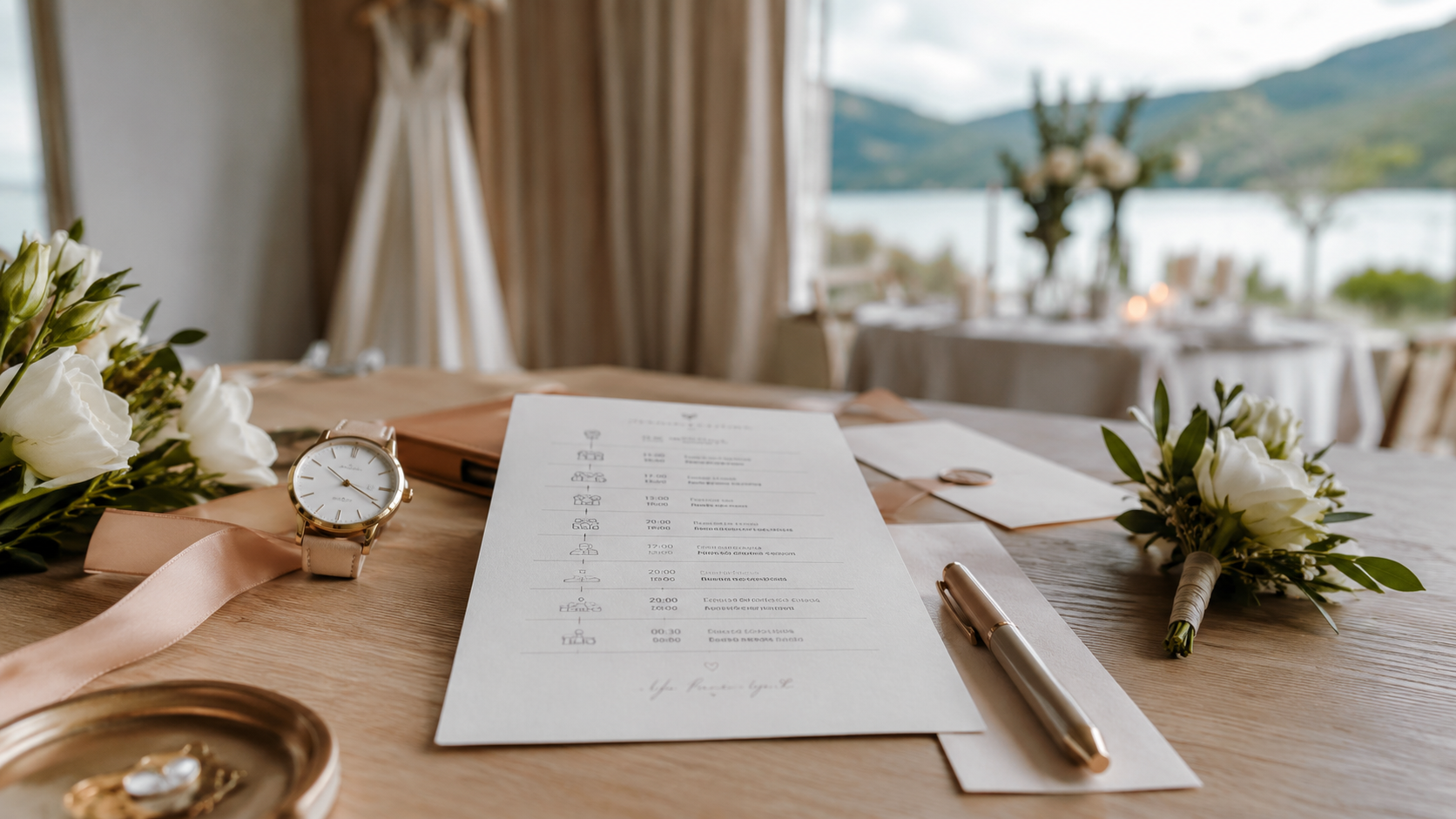
There is one document that makes a bigger difference to your wedding day than anything else, and it is not the speech, not the menu, and not the playlist. It is the timeline.
A wedding day timeline is simply the schedule for the day: who does what, when and where, from the morning preparations to the last dance. It sounds bureaucratic. It is the opposite. A good timeline is what lets you stop thinking about the clock, because someone else is doing it for you. It is the freedom to be present at your own celebration.
Here is how to build one that actually works.
Why the Timeline Matters So Much
A wedding day has many moving parts that need to meet each other: the photographer arriving for the preparations, the transport to the ceremony, the guests arriving, the food that has to be served warm, the speeches that need to fit between courses, the cake, the dancing.
Without a plan, the coordination lands on one person, and that person is usually one of you two. Which means you spend the day answering questions and checking the time instead of experiencing it.
With a good timeline, shared with the right people, the opposite happens. The master of ceremonies knows when the speeches go in. The photographer knows when the light is reserved for portraits. The kitchen knows when the main course goes out. And you can simply be there, in the middle of it all.
A Sample Timeline for a Classic Wedding Day
Every wedding is different, but here is an example for a day with an afternoon ceremony and an evening reception, which you can adjust to your own:
9.00 am: Preparations begin. Hair, makeup, breakfast with your closest people.
11.30 am: The photographer arrives and captures the preparations.
1.00 pm: An optional first look, if you choose to see each other before the ceremony, with calm portraits while the day is still quiet.
2.30 pm: Guests arrive at the ceremony.
3.00 pm: The ceremony.
3.45 pm: Congratulations, confetti, and the big group photos while everyone is gathered.
4.30 pm: Guests move to the reception venue, ideally with something to drink on arrival. You take portraits in the meantime if they were not done earlier.
6.00 pm: Dinner begins. A welcome speech first, then speeches spread between the courses.
9.00 pm: The cake is cut, coffee is served.
10.00 pm: The first dance, then the dance floor opens.
12.30 am: Late night food for those still dancing.
2.00 am: Thank you and goodnight.
The times are not a rulebook, but the proportions are worth noting: dinner with speeches almost always takes longer than expected, and the transitions between places and phases are where the delays happen.
The Most Common Mistakes, and How to Avoid Them
Too little air in the plan. The most common mistake is packing the day too tightly. Everything takes a little longer than planned: the hair, the driving, the group photos, the speeches. Build in buffers of 15 to 30 minutes at several points. If everything runs smoothly, you simply get more time to enjoy. If something runs slow, you have room.
Speeches without a frame. Speeches are among the loveliest parts of a wedding, and among the most common schedule breakers. A master of ceremonies who has a list of who is speaking, in what order, and with a gently suggested time frame is worth their weight in gold. Ask speakers to sign up with the MC in advance rather than taking the floor spontaneously, and the kitchen can plan the courses around the speeches too.
The photographer's time is not planned. The beautiful portraits need a defined slot in the schedule, ideally when the light is good. Agree with your photographer in advance on when and where, otherwise it gets taken from the mingling time, or not taken at all.
Nobody owns the plan on the day. The timeline only works if someone other than you is responsible for it on the day itself. Give it to the master of ceremonies, your witnesses, or a coordinator at the venue, and give them the mandate to make the small decisions along the way without asking you.
Share the Plan With Those Who Need It
A timeline that lives in your own head helps no one. It should be shared, in slightly different versions:
The full version with every detail goes to the master of ceremonies, witnesses, photographer, and the venue.
A simpler version goes to your guests, with the times they need to know: when the ceremony starts, when to be at the reception venue, and when dinner is served. That version belongs naturally on your wedding website, where guests find all the other practical information anyway.
Then you are spared the questions, and your guests are spared the wondering.
Fjora and the Wedding Day
In Fjora, you put the schedule for the day straight onto your wedding website, so every guest always has the updated times available on their phone. If something changes at the last minute, you update one place, and everyone sees the same thing.
The checklist helps you remember what needs to be in place before the day, the seating chart is ready for the venue, and the guest list with dietary needs is available for the kitchen. And throughout the day, the Memories module gathers your guests' photos via QR code, so the moments from the whole timeline, from preparations to the last dance, find their way to you.
Everything connects, and you no longer have to be the glue.
The One Thing Worth Remembering
A good timeline is not made to control the day down to the minute. It is made so that you do not have to.
Build the plan with generous air, hand it to someone you trust, share the times with your guests, and let the rest happen. The best wedding days are not the ones that followed the plan perfectly. They are the ones where the couple never had to think about it.
Want the schedule, guest list, seating chart, and memories in one place for your wedding day? Fjora is free to get started with, and built to make the day flow.
Frequently Asked Questions
What is a wedding day timeline?
A wedding day timeline is the schedule for the day showing who does what, when and where, from the morning preparations to the last dance. It is shared with the master of ceremonies, witnesses, photographer, and venue, so the day coordinates itself and the couple does not have to manage it.
How do we make a wedding day timeline?
Start with the fixed points: the ceremony time, the dinner start, and any end time at the venue. Then fill in preparations, transport, photography, speeches, cake, and dancing around them. Build in buffers of 15 to 30 minutes at several points, and hand responsibility for the plan to someone other than yourselves on the day.
How much time should we set aside for dinner and speeches?
Dinner with speeches almost always takes longer than expected. For a three course dinner with a normal number of speeches, three hours is a common starting point. A master of ceremonies with an overview of the speakers and a gentle time frame per speech helps the schedule hold.
When should the photographer arrive on the wedding day?
It depends on what you want covered. If you want photos from the preparations, the photographer should arrive two to three hours before the ceremony. Also agree on a defined slot for portraits, ideally when the light is good, so it is not taken from the mingling time.
Who should get the wedding day timeline?
The full version goes to the master of ceremonies, witnesses, photographer, and the venue contact. A simpler version with the key times is shared with guests, ideally on the wedding website, so everyone knows when and where to be.