

The complete checklist for wedding planning in Norway
26 May 2026
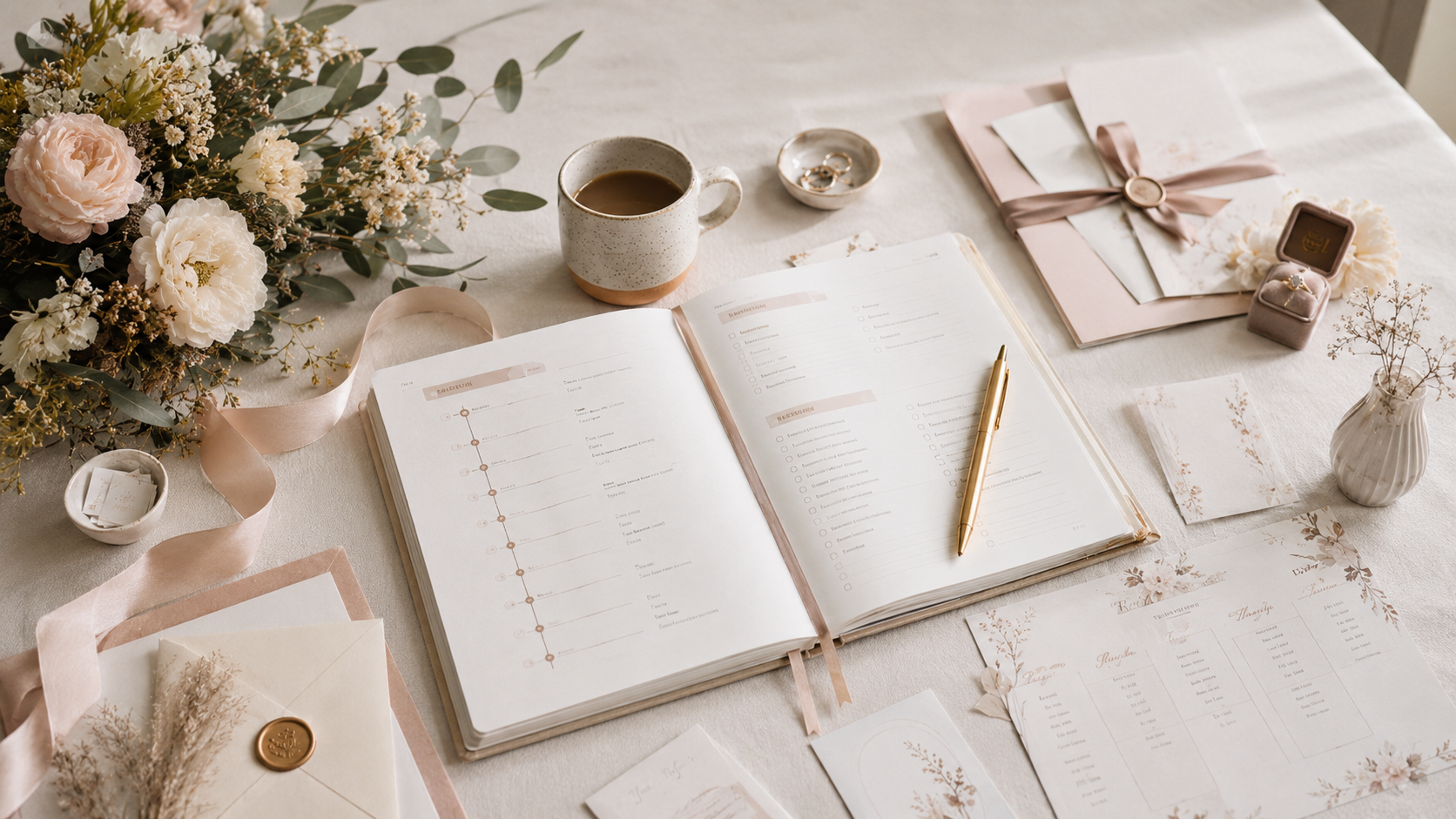
There is one question almost all newly engaged couples ask themselves at some point during planning: is there anything we've forgotten?
It's a good question, and it's no coincidence that it comes up. Wedding planning involves hundreds of small and large decisions, and they don't arrive in any natural order. Some things are urgent. Others can wait. And some things nobody remembers to tell you about until it's a little too late.
This checklist is not meant to stress you out. It's meant to do the opposite: to give you the overview that allows you to take one thing at a time, in the right order, without wondering whether you've missed something.
We've built it around what actually applies in the Norwegian market, and with the understanding that weddings vary greatly. Some are intimate and simple. Others are large, multi-day events with many ceremonial elements. Use what fits for you and skip what doesn't.
As soon as you've decided
Some things should be done quickly — not because planning can't wait, but because the best options disappear early.
The most important thing of all is to book your wedding venue. The most popular venues in Norway are fully booked one to two years in advance, especially from May to August. Find three to five places you'd like to visit, book viewings, and make a decision. The date will fall into place naturally once the venue is confirmed.
Book your photographer just as early. The most sought-after photographers are often booked up just as quickly as venues. Browse portfolios, get a feel for what you like, and reach out.
Clarify who will perform your ceremony. If you want a specific minister, humanist celebrant, or civil registrar, it's wise to get in touch early — especially around the popular midsummer dates.
Set a budget you're both comfortable with. Not a final budget, but a framework. It's easy to start looking at everything without knowing what's realistic, and that makes planning harder than it needs to be.
18 to 12 months before
Send save-the-dates to your guests. A simple message that the date is set, so people can make plans. Especially important for guests who live far away or need to arrange travel.
Book music or entertainment. Good bands and DJs with wedding experience are popular and fill up early. Decide whether you want music during the ceremony, during dinner, and for the dancing, and book accordingly.
Book catering if it's not included with the venue. Many catering companies have fixed wedding partners and are fully booked a year in advance.
Start looking at bridal attire. Whatever outfit the bride has in mind, it's wise to start early. Made-to-order pieces need lead time, and alterations take time too. The same applies if the outfit is being imported or custom-made.
Put together a guest list, version one. Not the final one, but a framework. The number of guests affects almost every other decision you make.
12 to 9 months before
Order the wedding dress. By now at the latest. A lead time of four to six months is common, and alterations come on top of that.
Book the floral designer. The best florists who specialise in weddings take a limited number of bookings per season. Schedule a consultation and discuss style and budget.
Plan your honeymoon and book if you know where you want to go. Popular destinations fill up and prices rise.
Book your hair stylist and makeup artist. Book a trial day in addition to the wedding day itself. This gives you confidence and time to make adjustments.
Decide on the content of your ceremony. Which readings, songs, and rituals do you want to include? Talk with your officiant about what's possible and what you'd like.
9 to 6 months before
Send the formal invitations with an RSVP deadline. Digital invitations make it easier to keep track of who's coming, and are today just as common and elegant as paper.
Sort out the groom's attire. Renting a tuxedo or buying a suit takes time, and traditional outfits that need to be ordered or imported require extra lead time.
Order the cake. Cake designers and bakeries with wedding experience book up. Arrange a tasting and agree on the design well in advance.
Order the rings. Engraving and sizing typically takes four to six weeks. Don't leave this too late.
Think through who will give a speech and in what order. Give your speakers plenty of time to prepare.
6 to 3 months before
Begin the seating plan once most RSVPs are in. Who knows whom? Who works well together? Take your time with this — it affects the atmosphere of the evening more than most people realise.
Create a schedule for the wedding day. Hour by hour from the time you wake up to the end of the reception. Share it with your photographer, venue, toastmaster, and everyone else involved.
Book transport. Cars to the ceremony, from the ceremony to the venue, and any travel arrangements for guests.
Confirm all the details with your suppliers. Go through the list and verify bookings, timings, and practical matters.
Prepare any personal vows, readings, or speeches you plan to give yourselves.
The final month
Confirm all bookings. A quick message to the venue, photographer, catering, music, and everyone else. It may feel like overkill, but it isn't.
Settle any outstanding payments. Most suppliers will want final payment close to the wedding day.
Lay out everything for the wedding day. Rings, shoes, outfit, jewellery, your small bag. Everything — so you're not searching for anything on the day.
Pack an overnight bag for the wedding night.
Breathe. The planning is almost over. What remains is to live what you've planned.
One thing every couple needs
All of these points are easy to understand. What's difficult is remembering them at the right time, and keeping track of what's been done and what's still outstanding — especially when two people are planning together and each has their own picture of where things stand.
Fjora brings the entire checklist into one system, with deadlines, categories, and an overview you can both see and update in real time. You don't have to dig through message threads and spreadsheets to find out whether the photographer has been paid or whether the seating plan is finished. That's what Fjora is there for.