

The Final Weeks Before Your Wedding: How to Land Your Bridal Era Without Burning Out
2 July 2026
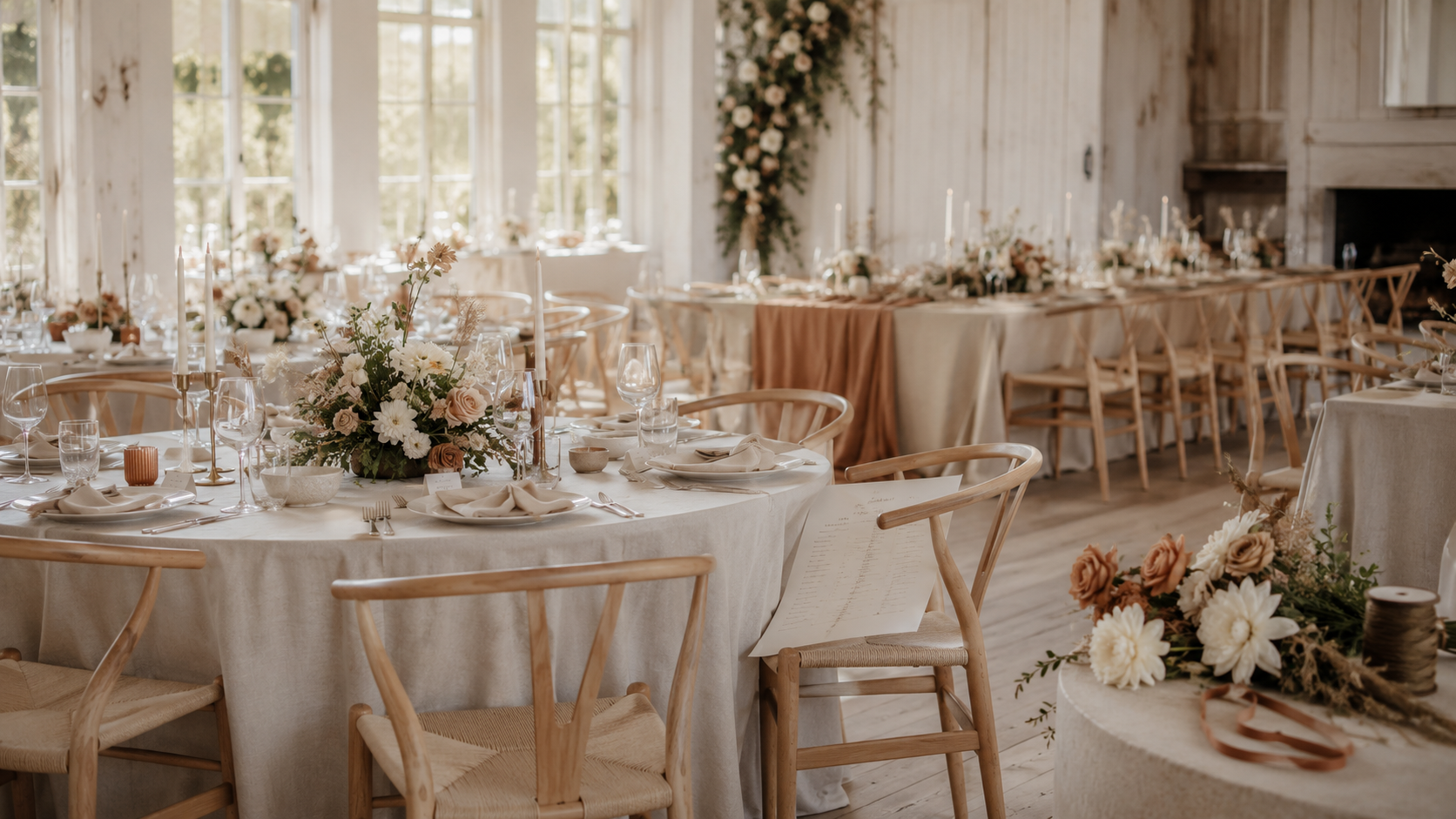
Something happens to time in the final weeks before a wedding. Months of planning that moved in slow motion suddenly accelerate. The days get shorter. The list feels longer. And somewhere in your stomach, a blend of anticipation and quiet panic sets in over everything still left to do.
Welcome to the final stretch of your bridal era. The shortest, the most intense, and in many ways the loveliest, if you can manage to be a little present in it.
Most guides for this period are pure task lists: break in your shoes, try the dress one last time, confirm with your vendors. That is useful, and we will get to it. But what nobody tells you is how to get through the final weeks without being completely exhausted by the time the day actually arrives.
Why the Final Weeks Feel Different
Early in your bridal era, planning is about big, fun choices. Venue. Style. Atmosphere. Dreams.
The final weeks are about something else: details, confirmations, and coordination. Less dreaming, more logistics. Less Pinterest, more spreadsheet. And that is an entirely different kind of mental load.
At the same time, the pressure of expectation rises. People ask more and more often "are you ready?" and "are you excited?", and even though they mean well, it can add a feeling that everything has to be perfectly in order.
It helps to know that this phase feels different because it is different. You are not worse at planning than before. You have simply reached the part that takes the most coordination and the least creativity.
Three to Four Weeks Out: Landing the Big Pieces
This is the time for confirming rather than deciding. The big choices are made. Now it is about making sure everything actually happens the way you agreed.
Go through all your vendor agreements. Confirm times, deliveries, and details with the venue, caterer, photographer, florist, and everyone else. A short message confirming "see you at 2pm as arranged" is worth a lot to both sides.
Make sure the final RSVPs are in. At this point, gently follow up with anyone who still has not responded, because you now need the final number to land the seating chart and catering.
Finalise the guest list and start or complete the seating chart. Once the responses are in, you can put together the last piece of the puzzle.
Have a run-through with your witnesses or your master of ceremonies. Anyone with a role on the day should know what is expected of them, so you are not coordinating everything yourself when the day arrives.
One to Two Weeks Out: The Details and the Calm
Now it is getting close, and the focus shifts to the practical details and, just as importantly, to you.
Make a run-sheet for the day itself. Who does what, when. When the photographer arrives, when the ceremony is, when the food is served, when the speeches begin. Share it with those who need it. This one document saves you a hundred questions on the day.
Confirm transport and accommodation. For yourselves and for traveling guests.
Prepare the physical things. Place cards, the program, any speeches, rings, outfits ready and pressed. Break in your shoes at home if they are new. Keep everything gathered in one place, so nothing gets forgotten in the morning rush.
And then the most important thing, and the easiest to forget: plan a little calm. Do not book major treatments or make drastic changes right before. Sleep. Eat. Breathe. A tired bride who has been stressed for two weeks has a harder day than a well-rested one. Looking after yourself in the home stretch is not selfish. It is smart.
The Days Before: Loosen Your Grip a Little
In the final days, the most important advice is perhaps the hardest to follow: not everything is going to be perfect, and that is completely fine.
Something will deviate from the plan. A flower is not quite the right colour. A guest cancels at the last minute. The weather does not do what you hoped. These are not signs that something has gone wrong. It is simply what weddings are, every single one of them.
The couples who look back on their day with the most joy are rarely the ones who had the fewest hiccups. They are the ones who decided in advance that they would enjoy the day no matter what happened.
Hand over as much as possible to others in the final days. You have planned this for months. Now it is allowed to let your witnesses, your family, and your vendors take over the practical things, so you can be present at your own celebration.
When the Nerves Arrive
It is completely normal to be nervous in the final weeks. It does not mean something is wrong, or that you have doubts. It means this matters to you.
Talk about it, ideally with your partner. They are often just as nervous, and saying it out loud makes it smaller. Wedding nerves are best shared.
And remember what all of this is actually about. In the middle of run-sheets and place cards, it is easy to lose sight of the fact that the end product is not a perfect party. It is a marriage. The party is just the way you celebrate the start of it.
Fjora in the Home Stretch
The final weeks are precisely when it is easiest to lose track, because there are so many small things to confirm, coordinate, and remember all at once.
In Fjora, you have the checklist showing what is left, so nothing slips through the cracks in the home stretch. The guest list and RSVP overview give you the final number you need to land the seating chart, and the seating chart can be adjusted in minutes when a last cancellation comes in. The wedding website keeps your guests updated on the schedule and practical details, so you are not answering the same questions over and over during the busiest time.
And because both of you have the same access and the same overview, neither of you has to be the one carrying it all alone right when there is the most to carry.
It is not about turning the final weeks into another project. It is so you can spend them on what they actually are: your last days as an engaged couple, right before all the good things.
The One Thing Worth Remembering
The final weeks of your bridal era are short, intense, and over far too fast. They take more coordination than creativity, and more calm than most people allow themselves.
Confirm what needs confirming. Prepare what can be prepared. And then, when the list is as short as it is going to get, loosen your grip a little and let yourself land.
Because soon it will not be your bridal era anymore. Soon it will just be life, together. And that is the whole point.
In the middle of the home stretch? Fjora brings your checklist, guest list, RSVP, seating chart, and wedding website into one place, so the final weeks before your wedding are about you, not about keeping track of everything. Get started for free.
Frequently Asked Questions
What should I do in the final weeks before my wedding?
Spend the last three to four weeks confirming rather than deciding: go through all vendor agreements, secure the final RSVPs, finalise the guest list and seating chart, and clarify roles with your witnesses and master of ceremonies. The last one to two weeks are about practical details like the run-sheet, transport, and outfits, plus making sure you get enough rest.
How do I handle wedding nerves in the final days?
Wedding nerves are completely normal and usually just mean the day matters to you. Talk about them with your partner, who is often just as nervous. Remember that not everything will be perfect, and that is fine. The couples who enjoy the day most are the ones who decided in advance to do so regardless.
When should the final RSVPs be in?
You should have your final responses three to four weeks before the wedding, so you can land the seating chart and give your caterer the final headcount. Follow up gently with guests who still have not responded well before this point.
What is a run-sheet, and do I need one?
A run-sheet is a timeline for the wedding day itself that shows who does what and when, from the photographer arriving to the last dance. It is extremely useful because it lets you and everyone with a role know what is happening, so you are not coordinating everything yourself on the day.
How do I avoid burning out before the wedding day?
Plan calm into the final weeks. Avoid major treatments or drastic changes right before, prioritise sleep and food, and hand over as much of the practical work as possible to witnesses, family, and vendors in the final days, so you can be well-rested and present on the day.