

Two Cultures, One Wedding: How to Plan a Celebration That Holds It All
29 June 2026
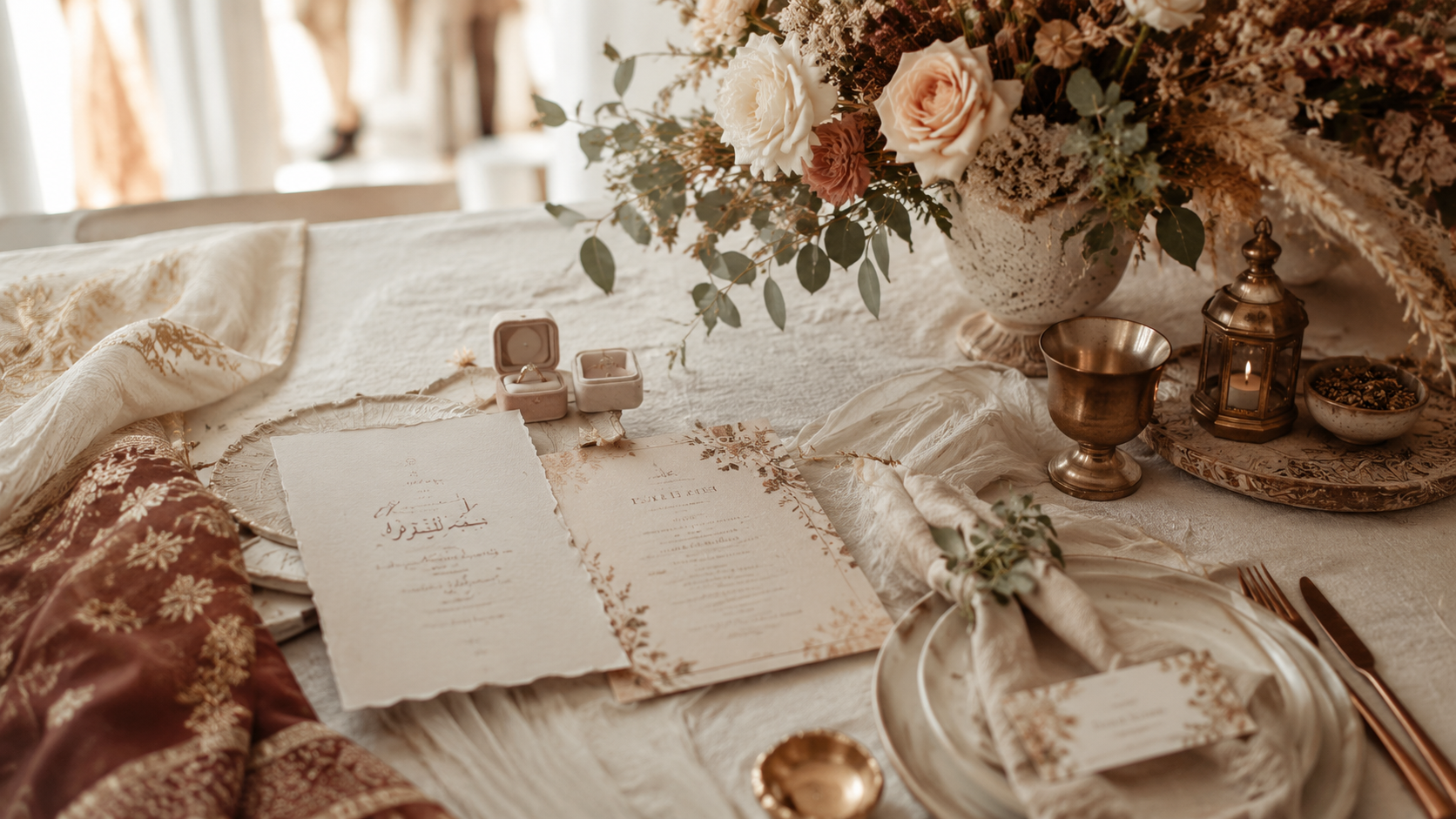
Some weddings bring together more than two people. They bring together two families, two traditions, sometimes two languages, two ways of celebrating, and two sets of expectations that do not always agree on what a wedding is supposed to be.
It is a beautiful thing. It is also one of the more complex planning tasks a couple can take on.
Because when you combine backgrounds, whether that is two religions, two nationalities, two regions, or simply two families with very different traditions, you are not just planning a party. You are planning a celebration that has to make people from different worlds feel equally welcome, equally included, and equally at home. Under the same roof. On the same day.
Here is how you make it work, without it becoming overwhelming.
Start With the Conversation, Not the Planning
Before you decide anything about venue, ceremony, or menu, you need one honest conversation: what matters most to each of you?
It is rare that everything can be included at full scale. A wedding that tries to carry out two complete traditions in their entirety often ends up too long, too expensive, and too exhausting for everyone involved. The art is not including everything. The art is knowing what matters most.
Talk about which elements are non-negotiable for each of you. Perhaps a particular ceremonial moment is essential to one of you, while the other cares most that the food reflects where they grew up. Once you know what genuinely matters, it becomes much easier to build a day that feels true to both of you, without trying to force in absolutely everything.
And remember: this is also a conversation you will have with your families. The clearer the two of you are with each other first, the easier it is to stand united when others have opinions.
The Ceremony: One, Two, or Something Entirely Your Own
When two traditions meet, there are usually three paths.
Some couples choose two separate ceremonies, often on different days or at different times, each true to its own tradition. That gives full space to both, but requires more time, more planning, and often more budget.
Others choose a single blended ceremony, where elements from both traditions are woven together into something new. That takes thoughtful planning and often an officiant comfortable with combining, but it can be deeply beautiful and profoundly personal.
Still others choose a main ceremony in one tradition and let the other tradition shape the reception, the speeches, the food, or the rituals through the evening.
There is no right answer here. There is only the one that feels right for you, and that your families can recognise themselves in.
A Guest List That Spans Worlds
A multicultural guest list is often more complex than a typical one, and that places a few extra demands on the planning.
Your guests may not all share a language. Some understand English, some another language, some neither fluently. Practical information, the schedule, and even speeches may need to be available in more than one language, so that no one is left feeling out of step at their own celebration.
Your guests may have very different expectations of what happens. A guest from one tradition might know exactly what a particular ceremonial act means, while a guest from another has never seen it before. A little explanation, whether in the program or on the wedding website, lets everyone participate rather than just observe.
And the guest list can be large. Many cultural traditions hold a broader understanding of who belongs at a wedding, where extended family, neighbours, and the wider community are naturally invited. That is one of the most beautiful things about these celebrations, but it makes guest management a substantial task.
Food: Where Cultures Meet Best of All
If there is one place two cultures can come together without compromise, it is on the plate.
Food is one of the most direct ways to honour a background, and one of the most appreciated by guests. Many couples let the menu hold dishes from both traditions, either side by side or as different parts of the meal through the evening.
There are some practical considerations that become especially important in a multicultural wedding. Different traditions have different dietary rules, and a guest list that spans cultures usually has a wider range of needs than usual: vegetarian, halal, no pork, no alcohol in the food, and a range of allergies. Collecting this systematically, and making sure the caterer has a full overview, is not a detail. It is what makes it possible for every guest to actually eat and feel looked after.
Multi-Day Celebrations: When One Day Is Not Enough
Many cultural traditions stretch a wedding across several days, with different ceremonies, parties, and gatherings before and after the wedding itself.
If you are planning a celebration over multiple days, the coordination becomes a level more complex. Different guests may be invited to different parts. Different days have different dress codes, different schedules, and different logistics. Traveling guests need an overview of the whole sequence, not just the main event.
The key here is communication. Guests need to know what happens when, where they should be, what to wear, and what to expect. The more of this you can gather in one place that everyone can access, the fewer misunderstandings and the fewer questions along the way.
How to Stay on Top of It Without Losing the Joy
It is easy to let the complexity of a multicultural wedding take over. But remember why you are doing this: because you have two rich backgrounds worth celebrating, and because you want everyone you love to be part of it.
A few principles that help:
Keep all your information in one place, accessible to both partners and easy to share with family. When there are many moving parts, scattered information is the fastest route to chaos.
Collect your guests' needs early and systematically, especially language and dietary requirements, so you are not chasing details at the last minute.
Communicate clearly to your guests, ideally in more than one language, so everyone understands what is happening and feels included.
And delegate. A large, complex wedding is not something two people should carry alone. Let your families contribute what they can and know best.
Fjora and the Multicultural Wedding
A wedding that holds two cultures has more moving parts than most, and that is exactly the kind of complexity Fjora is built to handle.
Your wedding website can hold the schedule for multiple ceremonies or multiple days, practical information for traveling guests, and explanations that help everyone understand what is happening. The guest list manages a large and varied group, and dietary needs like halal, vegetarian, or allergies follow each guest through the whole system, from RSVP to seating chart to catering overview. The RSVP gathers responses in one place no matter how many guests or how many languages are involved. And the seating chart helps you build a room where people from different worlds feel at ease.
Both of you have the same access and the same overview, which matters a great deal when two families and two traditions are being coordinated into one celebration.
Fjora takes no position on which traditions you should follow. That is entirely your choice. But once you have decided, Fjora is where all the practical detail can live, so you can spend your energy on the celebration itself rather than the logistics.
The One Thing Worth Remembering
A wedding that unites two cultures is not a challenge to overcome. It is an opportunity few people get: to create one day that honours two histories, and to gather two worlds in the same room around the same thing.
It takes more planning. It takes more communication. But it also gives you something most weddings do not: a celebration that is richer, broader, and more personal precisely because it does not fit a single mould.
It is worth every extra hour it takes to get right.
Planning a wedding that unites two cultures or holds a large, varied guest list? Fjora brings your wedding website, guest list, RSVP, dietary needs, and seating chart into one place, so you can focus on the celebration. Get started for free.
Frequently Asked Questions
How do you plan a multicultural wedding?
Start by agreeing on which elements from each culture matter most, rather than trying to include everything. Then choose a ceremony format that fits, plan a menu and communication that hold all your guests, and gather all practical information in one place. Clear communication in more than one language and a good overview of your guests' needs are key.
Can you combine two religions or traditions in one wedding?
Yes. Many couples combine two traditions, either through two separate ceremonies, a single blended ceremony, or a main ceremony in one tradition with elements of the other throughout the reception. What matters most is that the solution feels right for both of you and can be recognised by both families.
How do I handle guests who speak different languages?
Make practical information, the schedule, and ideally the speeches available in more than one language. A wedding website where information can be read in multiple languages lets all your guests understand what is happening and feel included, whatever language they speak.
How do I accommodate different dietary needs at a multicultural wedding?
Collect dietary requirements systematically as part of the RSVP, including halal, vegetarian, no pork, alcohol-free, and allergies. Make sure your caterer has a full overview in good time. In a multicultural wedding the range of needs is usually broader than usual, so early collection matters.
How long does it take to plan a multicultural or multi-day wedding?
It varies, but expect more time than a traditional single-day wedding. Multiple ceremonies, a large guest list, and coordination between two families all require careful planning. Many couples start 18 to 24 months in advance, especially when the celebration spans several days.