

Wedding seating plan: how to figure out who sits where without losing your mind
21 May 2026
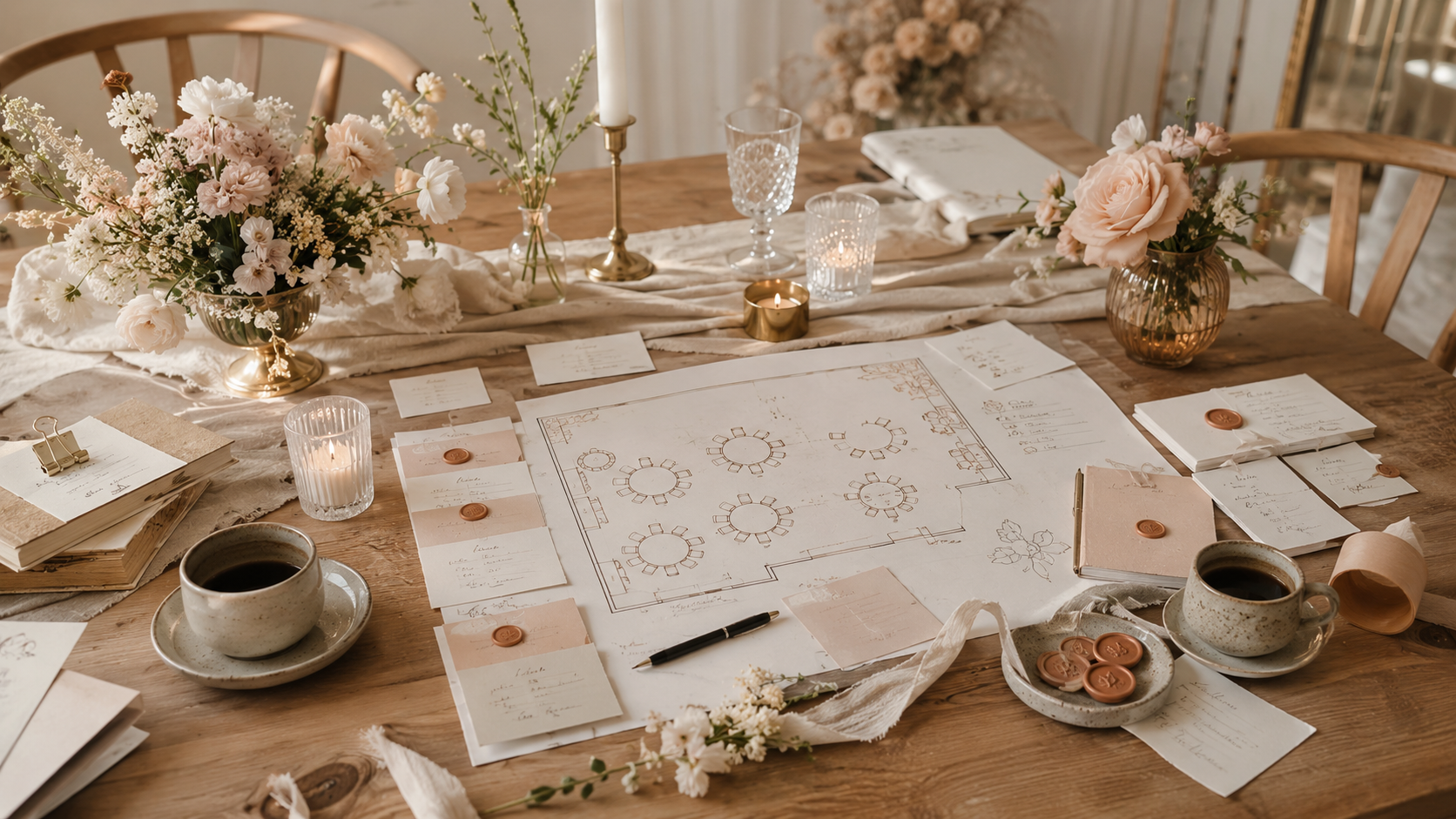
Of all the things you plan for a wedding, the seating plan is the one that surprises most people with how much thought and time it actually takes.
It always starts innocently. You have a guest list, you have a venue with tables, and you figure you just place people where it makes sense. Then it begins. The groom's mother doesn't want to sit next to her ex-husband. Your best friend just broke up with her partner and is coming alone. There's a guest you've met maybe three times who somehow ends up not knowing anyone at their table. And there's the uncle who really shouldn't sit too close to the bar.
And this is a fairly normal wedding.
Seating is, if we're honest, a kind of social chess. But it's chess you can win, if you know how to approach it.
When should you start?
The short answer is: not too early. The most common mistake is starting the seating plan long before the RSVP deadline because you're enthusiastic and want to get going. The problem is that you end up doing it two or three times, and the last round is always the most urgent and the one with the most changes.
Wait until you have responses from at least 80 to 85 percent of your guests. Then you have a realistic number to work with and can start sketching out a table layout based on actual numbers, not an estimate.
Think in groups, not individuals
It's a much better strategy to start with groups than with individuals. Who naturally belongs together?
Do a quick sort. The bride's close family. The groom's close family. Mutual friends from university. The groom's childhood friends. The bride's colleagues. Family friends from where you grew up.
Each natural group usually becomes one table, sometimes two if the group is large. The mixing happens at the edges, where an acquaintance from one context sits next to someone from another. That's safer and more enjoyable than trying to mix people who don't know each other at all.
Practical moves that actually work
Give everyone at least one person they know well. It sounds obvious, but it's easy to forget in the attempt to create interesting table combinations. One familiar face is the safety net that makes the evening work, regardless of who else is sitting around them.
Put families with young children near the exit. Not because they're less welcome, but because parents with small children are endlessly grateful to be able to step in and out without disturbing everyone else.
Think about hearing and acoustics. Older guests rarely enjoy sitting right next to the speakers or the stage. A table a little further into the room, where people can hear each other talk, makes a big difference.
Don't turn the top table into a holding pen. Some couples seat the wedding party, bridesmaids, toastmaster and parents at one long top table, which means the bridesmaids spend the whole evening away from their own partners. Consider whether a small top table with just the couple and immediate family works better.
Ask if anyone has preferences. Some guests have good reasons for not wanting to sit somewhere specific. A simple question in the RSVP form can save you an awkward surprise on the day.
The tricky situations
Divorced parents. Seat them at separate tables, ideally surrounded by their own friends or siblings. If they're on good terms they can sit near each other, but at separate tables. What doesn't work is forcing them to sit next to each other and pretend everything is fine.
Guests coming alone. If several guests are coming without a partner, see if any of them know each other or have something in common. A table where everyone is on their own but all in the same situation works surprisingly well. Some of the best wedding conversations happen between people who didn't know each other before.
Ex-partners in the room. If they're invited, give them a natural placement with people they know. Don't make it a project.
Guests you don't know well. Put them at a table with a couple of people who are naturally open and sociable. There are always people like that, and they solve the problem without you needing to do anything more.
Children. Under 10? A kids' table with easy sightlines for the parents. Over 10? A teen table works brilliantly if there are enough teenagers for one. Teenagers sitting at an adults' table where nobody talks to them is good for no one.
Top table or no top table?
The traditional long top table with the wedding party, parents, bridesmaids and toastmaster is increasingly being replaced by a small, intimate table for just the two of you. It gives you more freedom to move around during the evening and sit closer to the guests you actually want to spend time with.
There's no right answer here. Some families feel strongly about the traditional top table. Others find it liberating to skip it. Make that choice based on what actually suits you, not based on what's most common.
Tools that help
Many couples try the seating plan with sticky notes on a wall, printed guest lists spread across the floor, or a colour-coded spreadsheet. That works up to a point, but the problem is changes. And there are always changes. A family cancels two weeks out. Someone accepts at the last minute. A guest calls to say they're actually two, not one.
Fjora's seating module is built for that reality. You drag and drop guests between tables, see the result visually, and rearrange the whole layout in minutes when something changes. Place cards can be printed directly from there.
It doesn't make seating easy. But it makes it manageable.
Finally: let go of the perfectionism
No seating plan is perfect, and there's no requirement for it to be. There will always be someone sitting one table away from where they'd have preferred.
The most important thing is that people have someone to talk to, a drink in their hand and a place to sit. The rest almost always takes care of itself, because people at weddings are generally in a good mood and not looking for something to be unhappy about.
Give the seating plan the time and thought it needs, then let it go.